Archive for the ‘Forteana’ Category

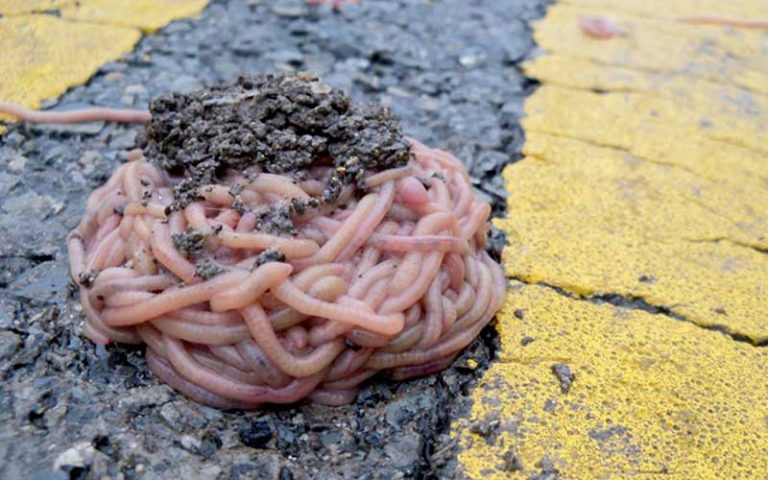
Earthworms also Eat Live Plants!

Earthworms eat seeds and seedlings, scientists have found.

The discovery they eat live rather than just dead plants will change the way we think about earthworms, which had been thought to benefit plants by recycling soil nutrients.

Earthworms eat live rather than just dead plants

Earthworms eat live rather than just dead plants

It may offer a way for gardeners and farmers to encourage more earthworms into their soil, for example.

But it also means invasive earthworms could be reducing populations of plants in once pristine soils.

Confirmation that earthworms feed on living plants is published in the journal Soil Biology and Biochemistry by Dr Nico Eisenhauer of the Georg-August-University Göttingen in Germany.

With colleagues, Dr Eisenhauer made the discovery studying the behaviour of Lumbricus terrestris, an anecic earthworm that inhabits soils around the world.

Originating in Europe, the worm occurs in grasslands, agricultural fields and forests and is invading soils across the US, Canada, Australia and New Zealand.

Previous studies have shown that some earthworms will swallow plant seeds, while others appear to collect seeds, burying them in their burrows.

May 23, 2010 | Leave a comment | Read More »

1930s Loch Ness Monster did exist! (Maybe)

Loch Ness Fish

Loch Ness Fish

The Loch Ness monster was believed to exist according to a 1930s declassified document.

In 1938, the chief constable of Inverness-shire raised concerns about protecting Nessie from hunters!

In a letter released by the National Archives of Scotland (NAS), he wrote: “That there is some strange fish [creature] in Loch Ness now seems beyond doubt.”

Interestingly he refers to it as a “strange fish“, and not a creature or monster.

But what is clear is at the time there was a real concern for the safety of the locals, tourists and the monster itself (if it exists!).

Transcript of the letter can be found below.

April 26, 2010 | Leave a comment | Read More »

Angry goat goes mad and attacks nursing home residents!

Angry Goat!Three people were taken to hospital after an angry goat invaded a nursing home in Australia.

The animal’s rampage at the On Luck Chinese nursing home in Melbourne ended only when it was caught by police.

The seven-year-old goat, named Billy, wandered into the grounds of the nursing home after escaping its enclosure at a nearby home.

The animal became agitated when a gardener tried to shoo it away, butting the gardener before attacking a second man, in his seventies, who rushed over to help.

Both of the men suffered suspected spinal injuries during the incident and the gardener, aged 60, was also left with cuts to his head and elbow.

A woman who had witnessed the furore also injured her ankle as she ran for help.

Source: Orange Quirky News [link].

April 22, 2010 | Leave a comment | Read More »

Montauk Monster found in Panama

Panama Beast

Montauk Monster found in Panama

Another hairless creature has been found, this time near Panama City.

The creature, dumbed a Montauk Monster look-a-like was allegedly spotted by teenagers crawling out of a cave near the town of Cerro Azul, north of Panama City.

Fearing for their safety as the beast moved towards them, they attacked the creature with sticks before throwing it into a pool of water.

They later returned to take pictures of the hairless, rubbery body, which were then posted on the website of the Central American Telemetro Television station.

The story and photos have now been reported on almost every Cryptozoology website with varying theories and explanations – hairless sloth seems to be one theory?

I’m a bit sceptical and suspect we will continue to see more and more of these weird things.

What do you think – real or fake?

September 18, 2009 | 6 Comments | Read More »

Top 10 Most Read Stories from August 2009

August was a fantastic month for Cryptoworld, with over 20,000 unique (new) visitors and almost 800,000 hits! Unfortunately hits aren’t really a true indication of the amount of visitors to a site, but it would be great if we can top the 1 million mark before the end of the year!

Anyway – the top stories for August are as follows – interestingly a couple of old stories have crept back into the top ten!

Argentine Ants

Scary Ants?

1) Scary! Ants form Global Mega-Colony
Very Scary: A single mega-colony of ants has colonised much of the world, scientists have discovered.
Read the whole start here >>>

2) Mermaid spotted in Israel
Israel was in the grips of mermaid fever in August after numerous sightings of the mythical sea creature off its coast.
Read the whole story here >>>

3) Orange balls of light seem over South London
Crowds of people gathered in Balham and Tooting (South London) to watch two sets of orange lights fly in formation across the night sky.
Still a very popular story – now with 75+ comments!!!
Read the whole story here >>>

The alleged Sewer Monster!

The alleged Sewer Monster!

4) Very Weird Unknown life form found in Sewers! (Video)
Unsurprisingly, the Sewer monster is still in the top 10. What is it? The debate seems to still be ongoing.
Read more, watch the video and decide for yourselves >>>

5) Sewer Creature is REAL – but not what you’d expect!
One possible answer – Bloodworms (Tubifex tubifex) – what’s your thoughts?
Watch the video here >>>

6) Lights, Lanterns and UFOs!
Lots and lots of people are seeing strange lights all over the world. Here in the UK, there are new sightings on an almost daily basis – but what are they?
Read the full story and watch the video here >>>

The Bare-faced bulbul

The Bare-faced bulbul

7) Bald Songbird discovered in Laos
The latest strange creature to emerge from a rugged region of Laos is a bald songbird, dubbed the “bare-faced bulbul”.
Read the full story here >>>

8 ) 4 new Thylacine sightings in 3 months!
An old story from June 2006 has crept back up the charts – Four new sighting of the Tasmanian Tiger (Thylacine) have been reported in the last three months on the outskirts of Portland, Southern Australia.
Read the whole story here >>>

A still from the Helensburgh Big Cat Video

Helensburgh Big Cat?

9) Big Cat captured on video in Helensburgh, Argyll?
An off-duty Ministry of Defence police dog handler has taken a video of what he claims is a panther-sized big cat.
Read the story (with photo) here >>>

10) Cannibal Frog found in Australia
The matchbox-sized green-stripe frog normally eats bugs – but this one swallowed a green tree frog.
Read the full story (with photo) here >>>

September 9, 2009 | Leave a comment | Read More »

Drinking Milk started in central Europe around 7,500 years ago

Do you Drink Milk?

Do you Drink Milk?

The ability to digest the milk sugar lactose first evolved in dairy farming communities in central Europe, not in more northern groups as was previously thought, finds a new study led by UCL (University College London) scientists published in the journal PLoS Computational Biology. The genetic change that enabled early Europeans to drink milk without getting sick has been mapped to dairying farmers who lived around 7,500 years ago in a region between the central Balkans and central Europe. Previously, it was thought that natural selection favoured milk drinkers only in more northern regions because of their greater need for vitamin D in their diet. People living in most parts of the world make vitamin D when sunlight hits the skin, but in northern latitudes there isn’t enough sunlight to do this for most of the year.

In the collaborative study, the team used a computer simulation model to explore the spread of lactase persistence, dairy farming, other food gathering practices and genes in Europe. The model integrated genetic and archaeological data using newly developed statistical approaches.

The study simulated the spread of lactase persistence and farming in Europe, and found that lactase persistence appears to have begun around 7,500 years ago between the central Balkans and central Europe, probably among people of the Linearbandkeramik culture. But contrary to popular belief, they also found that a need for dietary vitamin D was not necessary to explain why lactase persistence is common in northern Europe today.

Source and quoted text: University College London

September 4, 2009 | Leave a comment | Read More »

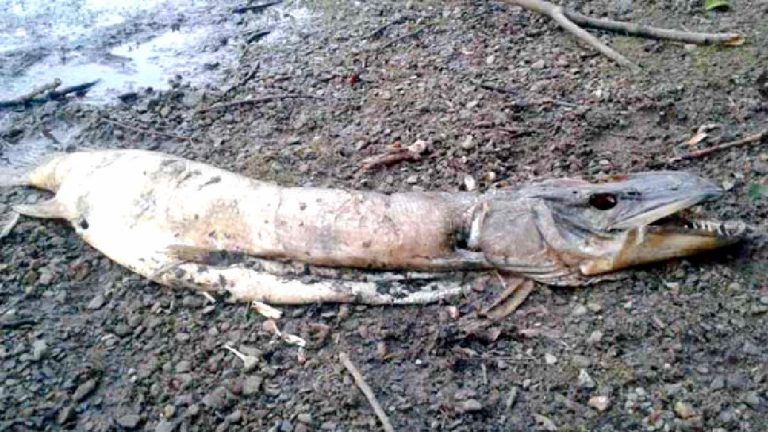
Weird – Piranha found in Devon River!

Weird - Piranha found in Devon river

Piranha found in Devon river

The Environment Agency said its staff were amazed to find a dead piranha in the East Okement tributary of the River Torridge.

The piranha, which has razor-sharp teeth, is generally considered to be the most ferocious freshwater fish in the world.

The 35cm (14in) fish was spotted by Bob Collett, Dave Hoskin and Eddie Stevens during a sampling trip on the river.

Fish species which the team would commonly expect to find within the river include Salmon, Brown Trout and possibly other species such as Bullheads, Stone loach and Minnow.

‘What we actually discovered was something we would not expect to find in our wildest dreams. We could hardly believe our eyes,’ said Eddie Stevens, from the Environment Agency.

Source: Environment Agency

August 30, 2009 | Leave a comment | Read More »

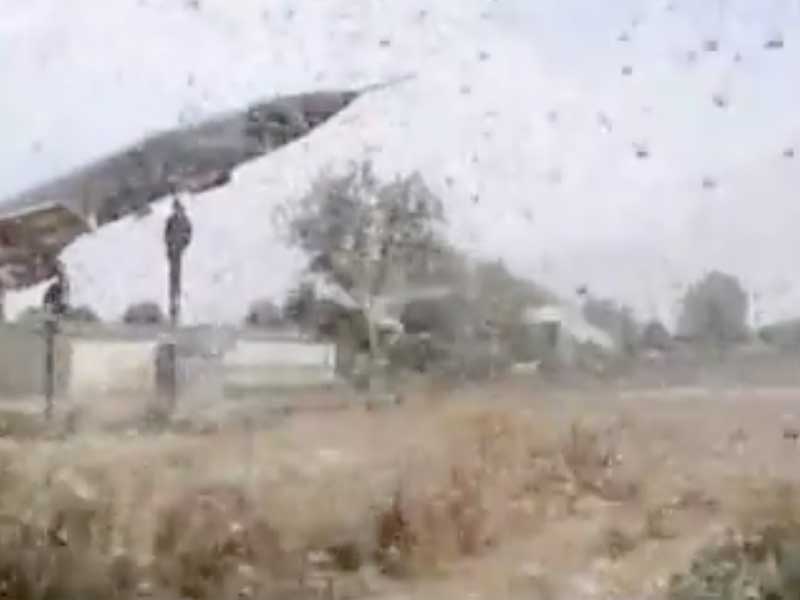
10 Million Ladybirds swarm on farm in Somerset!

It is estimated around 10 million Ladybirds may have landed on a farm in Coombe Saint Nicholas, drawn by the huge supply of food – yummy Aphids!

If you’re wondering – the aphids seem to thrive on plants that are grown in the region, which is used for eco-roofing.

July 29, 2009 | 1 Comment | Read More »

Video: Buzz Aldrin Punches Moon Landing Conspiracy Theorist!

This is brilliant – a little old, but perfectly relevant seeing how it’s the 40th anniversary of the moon landing.

Buzz Aldrin is confronted by a moon landing skeptic! The man angrily calls Aldrin a “coward” and a “liar.” Aldrin tells the man to get away from him, and when he refuses, Aldrin promptly punches him in the face.

The conspiracy theorist tried to sue Aldrin but the judge threw out the case, saying he had it coming!

Source: The Huffington Post.

July 22, 2009 | 3 Comments | Read More »

Joggers attacked by Buzzards!

Joggers have been left bloodied and scarred following a spate of attacks by buzzards.

Attacked by Buzzards

Attacked by Buzzards

It is like a scene from Alfred Hitchcock’s The Birds, with unsuspecting victims swooped on by avian attackers.

Stuart Urquhart, a solicitor from Bristol, was on holiday with his wife and two children in Helford, Cornwall, when he suffered three six-inch cuts to his head in a buzzard attack.

Mr Urquhart, 36, was jogging on a quiet lane near a river at around 9am, when he felt a searing pain in the back of his head before turning around to see a buzzard flying away.

He said: “I thought somebody had thrown some heavy sacking or carpet at me but I couldn’t see anyone. I carried on a few paces and then saw blood running down me and noticed a buzzard flying off into the trees.

“I have brown hair and I wasn’t sure if the buzzard had mistaken me for a big, slow rabbit, so I decided not to take any chances, and invested in a hat.”

Mr Urquhart, who was given a tetanus injection after the attack earlier this month, spotted the buzzard two days later on a telegraph pole. It swooped down with its talons out but Mr Urquhart managed to dive out of the way.

Common Buzzard (Buteo buteo)

Common Buzzard (Buteo buteo)

Last week, Paul Powell, a plasterer from Shurdington, Glos, was also attacked by a buzzard while out jogging.

Mr Powell, 38, suffered four puncture wounds to his scalp after a bird sunk its talons into his head.

He said: “I felt an almighty thud at the back of my head. At first I thought someone had hit me… and then I saw this big bird flying just above me. Then I felt a burning sensation and noticed there was blood dripping on to the ground.”

Mr Powell ran for cover, but the buzzard attacked him a second time. He was taken to hospital and also given a tetanus injection.

Ciaran Nelson of the RSPB said that it was very rare to see a spate of buzzard attacks.

“These are the only incidents of buzzards attacking humans we have heard of in the last year, so to have two in such a short period is exceptionally unusual,” he said.

“It is most likely that the birds are feeling territorial and are being extra defensive, as July and August is the period when their young will be starting to leave the nests.

Source and more info: Telegraph (uk).

July 20, 2009 | Leave a comment | Read More »
Page 1 of 512345