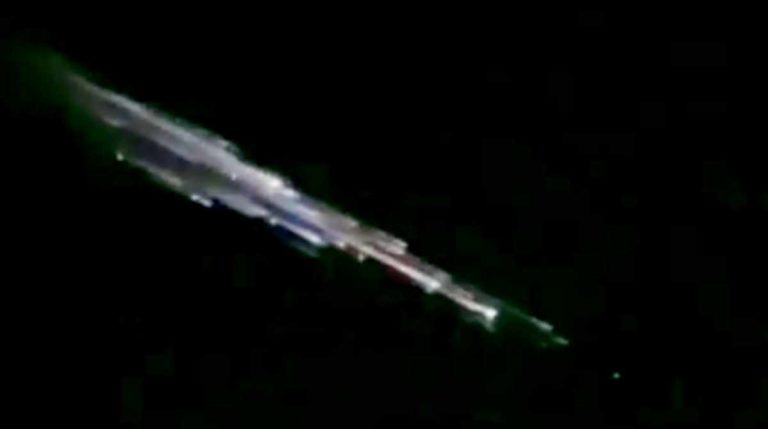
People in Asia have seen the longest total solar eclipse this century, with large areas of India and China plunged into darkness.
Amateur stargazers and scientists travelled far to see the eclipse, which lasted six minutes and 39 seconds at its maximum point.
The eclipse could first be seen early on Wednesday in eastern India.
It then moved east across India, Nepal, Burma, Bangladesh, Bhutan, China, Japan and the Pacific.
The eclipse first became total over India at 0053GMT, and was last visible from land at Nikumaroro Island in the South Pacific nation of Kiribati. It ended at 0418GMT.
Elsewhere, a partial eclipse was visible across much of Asia.
Scientists find first conclusive signature for uranium on Moon
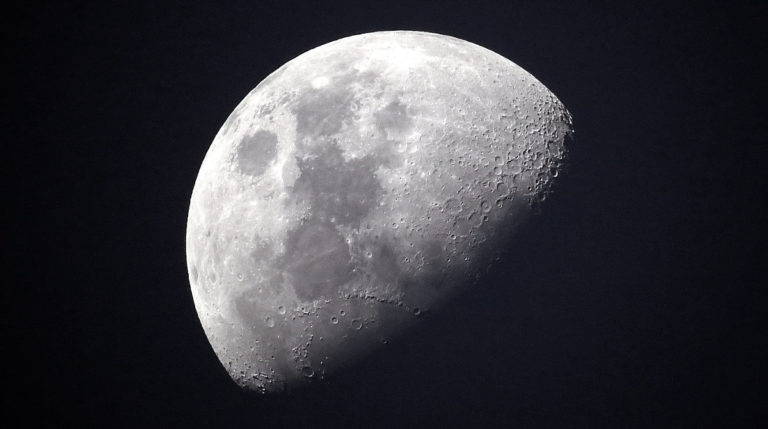
A team of scientists has found the first conclusive signature for the presence of uranium on the lunar surface, an element not seen in previous Moon-mapping efforts.
The uranium signatures were detected by Robert C Reedy, a senior scientist at the Tucson-based Planetary Science Institute, who is mapping the Moon’s surface elements using data gathered by an advanced gamma-ray spectrometer (GRS) that rode aboard the Japanese Kaguya spacecraft.
Kaguya was launched in September 2007 and crashed into the Moon at the end of its mission on June 10 of this year.
Earlier gamma-ray spectrometer maps from the Apollo and Lunar Prospector missions show a few of the Moon’s chemical elements.
But, the maps constructed by Reedy and the Kaguya GRS team, using data gathered by state-of-the-art, high-energy-resolution germanium detectors, are extending the earlier results and improving our understanding of the Moon’s surface composition.
In addition to uranium, the Kaguya GRS data also is showing clear signatures for thorium, potassium, oxygen, magnesium, silicon, calcium, titanium and iron.
New evidence underscores the theory of human origin that suggests humans most likely share a common ancestor with orangutans, according to research from the University of Pittsburgh and the Buffalo Museum of Science. Reporting in the June 18 edition of the Journal of Biogeography, the researchers reject as “problematic” the popular suggestion, based on DNA analysis, that humans are most closely related to chimpanzees, which they maintain is not supported by fossil evidence.
Jeffrey H. Schwartz, professor of anthropology in Pitt’s School of Arts and Sciences and president of the World Academy of Art and Science, and John Grehan, director of science at the Buffalo Museum, conducted a detailed analysis of the physical features of living and fossil apes that suggested humans, orangutans, and early apes belong to a group separate from chimpanzees and gorillas.
Chimpanzee, not our closest cousins?
They then constructed a scenario for how the human-orangutan common ancestor migrated between Southeast Asia—where modern orangutans are from—and other parts of the world and evolved into now-extinct apes and early humans. The study provides further evidence of the human-orangutan connection that Schwartz first proposed in his book The Red Ape: Orangutans and Human Origins (Westview Press, 2005).
Schwartz and Grehan scrutinised the hundreds of physical characteristics often cited as evidence of evolutionary relationships among humans and other great apes—chimps, gorillas, and orangutans—and selected 63 that could be verified as unique within this group (i.e., they do not appear in other primates). Of these features, the analysis found that humans shared 28 unique physical characteristics with orangutans, compared to only two features with chimpanzees, seven with gorillas, and seven with all three apes (chimpanzees, gorillas, and orangutans). Gorillas and chimpanzees shared 11 unique characteristics.
Human looking Orangutan?
Schwartz and Grehan then examined 56 features uniquely shared among modern humans, fossil hominids—ancestral humans such as Australopithecus—and fossil apes. They found that orangutans shared eight features with early humans and Australopithecus and seven with Australopithecus alone. The occurrence of orangutan features in Australopithecus contradicts the expectation generated by DNA analysis that ancestral humans should have chimpanzee similarities, Schwartz and Grehan write. Chimpanzees and gorillas were found to share only those features found in all great apes.
Schwartz and Grehan pooled humans, orangutans, and the fossil apes into a new group called “dental hominoids,” named for their similarly thick-enamelled teeth. They labeled chimpanzees and gorillas as African apes and wrote in Biogeography that although they are a sister group of dental hominoids, “the African apes are not only less closely related to humans than are orangutans, but also less closely related to humans than are many” fossil apes.
First, the frogs began disappearing, with as many as 122 species becoming extinct worldwide since 1980. Then honeybee colonies began to collapse. Scientists fear that bats might be next.
For the past three years, biologists in Virginia have been nervously watching a strange die-off of bats in the Northeast as a mysterious fungus spread rapidly through hibernating bat colonies, leaving caves that once served as safe havens for the hibernating creatures carpeted with the tiny, emaciated carcasses of an estimated 1 million dead bats.
Biologists were hoping that the fungus would somehow be contained or would burn itself out. Instead, they were shocked last week when researchers confirmed the presence of the fungus, dubbed white nose syndrome for the ring of white fungus that collects on bats’ muzzles and wings, in two caves in Virginia: Breathing Cave in Bath County and Clover Hollow in Giles County, hundreds of miles from the other known infected caves.
It’s hard enough to find fossils of hard things like dinosaur bones. Now scientists have found evidence of 95 million-year-old octopuses, among the rarest and unlikeliest of fossils, complete with ink and suckers.
The body of an octopus is composed almost entirely of muscle and skin. When an octopus dies, it quickly decays and liquefies into a slimy blob. After just a few days there will be nothing left at all.
The result is that preservation of an octopus as a fossil is about as unlikely as finding a fossil sneeze, and none of the 200 to 300 species of octopus known today had ever been found in fossilized form.
The origin of Claws has been discovered in a 390 million year old fossil from the famous Hunsrück Slate quarry near Bundenbach in Germany.
Photograph of Schinderhannes bartelsi
A missing link in the evolution of the front claw of living scorpions and horseshoe crabs was identified with the discovery of a 390 million-year-old fossil by researchers at Yale and the University of Bonn, Germany.
The specimen, named Schinderhannes bartelsi, was found fossilized in slate from a quarry near Bundenbach in Germany, a site that yields spectacularly durable pyrite-preserved fossils — findings collectively known as the Hunsrück Slate. The Hunsrück Slate has previously produced some of the most valuable clues to understanding the evolution of arthropods – including early shrimp-like forms, a scorpion and sea spiders as well as the ancient arthropods trilobites.
“With a head like the giant Cambrian aquatic predator Anomalocaris and a body like a modern arthropod, the specimen is the only known example of this unusual creature,” said Derek Briggs, director of Yale’s Peabody Museum of Natural History and an author of the paper appearing in the journal Science.
Scientists have puzzled over the origins of the paired grasping appendages found on the heads of scorpions and horseshoe crabs. The researchers suggest that Schinderhannes gives a hint. Their appendages may be an equivalent to those found in the ancient predatory ancestor, Anomalocaris — even though creatures with those head structures were thought to have become extinct by the middle of the Cambrian Period, 100 million years before Schinderhannes lived.
Reconstruction of Schinderhannes bartelsi
The fossil’s head section has large bulbous eyes, a circular mouth opening and a pair of segmented, opposable appendages with spines projecting inward along their length. The trunk section is made up of 12 segments, each with small appendages, and a long tail spine. Between the head and trunk, there is a pair of large triangular wing-like limbs — that likely propelled the creature like a swimming penguin, according to Briggs. Unlike its ancestors from the Cambrian period, which reached three feet in length, Schinderhannes is only about 4 inches long.
This finding caps almost 20 years of study by Briggs on the Hunsrück Slate. “Sadly, the quarry from which this fabulous material comes has closed for economic reasons, so the only additional specimens that are going to appear now are items that are already in collectors’ hands and that may not have been fully prepared or realized for what they are,” said Briggs.
Scientist from a Chinese university have said 2 out of 11 piglets born from genetically altered cloned pigs have inherited the genes that make them glow fluorescent green under ultraviolet light.
The original glowing pigs were genetically altered by adding genetic material from jellyfish to help the study of stem cell research.
The scientists continue to say that this research will help to study human disease…
Glowing green pigs do sound fun, but I must confess I am struggling to understand how genetically messing with animals can really help combat human diseases!