Latest News

Rare ‘blood sucking’ fish found in River Wear (UK)

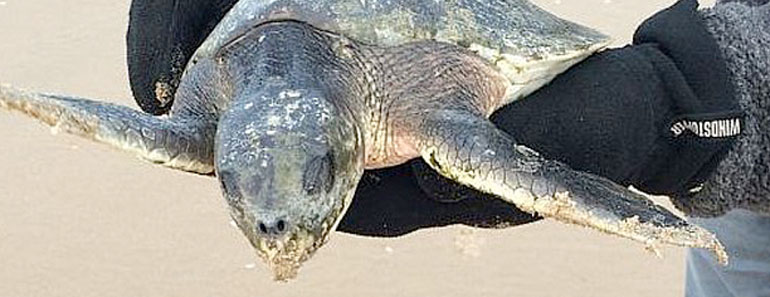
Rare Sea Lamprey

Rare Sea Lamprey

The discovery of a rare blood-sucking fish in the River Wear is proof of high water quality, conservationists said.

Seven adult sea lampreys, which have toothed, funnel-like sucking mouths, have been found in the river near Chester-le-Street, County Durham.

Only three species of lampreys remain in Britain, and they are protected under European law.

The Environment Agency said the creatures only breed in water which is very clean.

So far the agency has identified twelve spawning sites, known as redds.

Source: BBC News.

June 29, 2009 | Leave a comment | Read More »

UFO photographed over Edgware, London

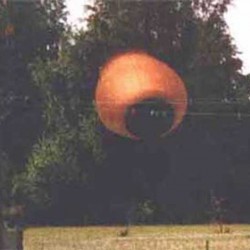
A UFO has been caught on camera in broad daylight flying over Edgware.

UFO over Edgware

UFO over Edgware

Mark Lawes snapped the mysterious odject on Tuesday 23rd June 2009 just after 7pm, and has upload the pictures to his Flickr account: http://www.flickr.com/photos/marklawes

Mark writes: Time was 19:11 23/06/2009 Edgware London UK looking NNE. The Sun was 90 degrees west. No clouds clear sky. A glint in the sky caught my eye, this object was so far away I had trouble seeing it. I watched it for about 2 mins and it remained in the same place throughout. Decided to run for the camera, managed to locate it in the same place and focused camera best poss with 150mm digital lense on a Olympus E500 SLR. I took several continuous bursts and this is the result. It was not a plane I see plenty of them living near Heathrow Airport(15 miles). This was strange, didn’t move and the pictures now seem to mystify it more. I ran and got my binoculars and within 10 seconds of turning my back… it was gone.

Did anybody else see it, or have an explanation?

June 27, 2009 | 4 Comments | Read More »

European Cave Artists Were Female

New evidence suggest some, if not all European Cave Paintings were made by females, and not males as previously thought.

The famous Pech Merle Spotted Horses Mural in France

For about as long as humans have created works of art, they’ve also left behind handprints. People began stenciling, painting, or chipping imprints of their hands onto rock walls at least 30,000 years ago.

But until recently, most scientists assumed these prehistoric handprints were male. But “even a superficial examination of published photos suggested to me that there were lots of female hands there,” said Pennsylvania State University archaeologist Dean Snow.

By measuring and analyzing the Pech Merle hand stencils, Snow found that many were indeed female.

Source: National Geographic.

June 27, 2009 | Leave a comment | Read More »

3-foot long Megapiranha fossil found

Artist's rendering of Megapiranha Paranensis

Artist's rendering of Megapiranha Paranensis

How did piranhas — the legendary freshwater fish with the razor bite — get their telltale teeth? Researchers from Argentina, the United States and Venezuela have uncovered the jawbone of a striking transitional fossil that sheds light on this question. Named Megapiranha paranensis, this previously unknown fossil fish bridges the evolutionary gap between flesh-eating piranhas and their plant-eating cousins.

Present-day piranhas have a single row of triangular teeth, like the blade on a saw, explained the researchers. But their closest relatives — a group of fishes commonly known as pacus — have two rows of square teeth, presumably for crushing fruits and seeds. “In modern piranhas the teeth are arranged in a single file,” said Wasila Dahdul, a visiting scientist at the National Evolutionary Synthesis Center in North Carolina. “But in the relatives of piranhas — which tend to be herbivorous fishes —the teeth are in two rows,” said Dahdul.

Megapiranha shows an intermediate pattern: it’s teeth are arranged in a zig-zag row. This suggests that the two rows in pacus were compressed to form a single row in piranhas. “It almost looks like the teeth are migrating from the second row into the first row,” said John Lundberg, curator at the Academy of Natural Sciences in Philadelphia and a co-author of the study.

Fossilised teeth and upper jaw of Megapiranha paranensis

Fossilised teeth and upper jaw of Megapiranha paranensis shows intermediate tooth arrangement between single-rowed piranhas and their double-rowed relatives. The fossil measures about 3 inches in length.

If this is so, Megapiranha may be an intermediate step in the long process that produced the piranha’s distinctive bite. To find out where Megapiranha falls in the evolutionary tree for these fishes, Dahdul examined hundreds of specimens of modern piranhas and their relatives. “What’s cool about this group of fish is their teeth have really distinctive features. A single tooth can tell you a lot about what species it is and what other fishes they’re related to,” said Dahdul. Her phylogenetic analysis confirms their hunch — Megapiranha seems to fit between piranhas and pacus in the fish family tree.

The Megapiranha fossil was originally collected in a riverside cliff in northeastern Argentina in the early 1900s, but remained unstudied until paleontologist Alberto Cione of Argentina’s La Plata Museum rediscovered the startling specimen —an upper jaw with three unusually large and pointed teeth — in the 1980s in a museum drawer.

Cione’s find suggests that Megapiranha lived between 8-10 million years ago in a South American river system known as the Paraná. But you wouldn’t want to meet one today. If the jawbone of this fossil is any indication, Megapiranha was a big fish. By comparing the teeth and jaw to the same bones in present-day species, the researchers estimate that Megapiranha was up to 1 meter (3 feet) in length. That’s at least four times as long as modern piranhas. Although no one is sure what Megapiranha ate, it probably had a diverse diet, said Cione.

Other riddles remain, however. “Piranhas have six teeth, but Megapiranha had seven,” said Dahdul. “So what happened to the seventh tooth?”

“One of the teeth may have been lost,” said Lundberg. “Or two of the original seven may have fused together over evolutionary time. It’s an unanswered question. Maybe someday we’ll find out.”

June 27, 2009 | Leave a comment | Read More »

Legless frogs mystery solved – possibly!

Scientists think they have resolved one of the most controversial environmental issues of the past decade: the curious case of the missing frogs’ legs.

Legless frogs mystery solved?

Around the world, frogs are found with missing or misshaped limbs, a striking deformity that many researchers believe is caused by chemical pollution.

However, tests on frogs and toads have revealed a more natural, benign cause.

The deformed frogs are actually victims of the predatory habits of dragonfly nymphs, which eat the legs of tadpoles.

Source: BBC Earth News.

June 26, 2009 | Leave a comment | Read More »

Huge number of sharks facing extinction!

Over-fished Hammerhead Shark

Over-fished Hammerhead Shark

Many species of open ocean shark are under serious threat, according to an assessment by the International Union for Conservation of Nature (IUCN).

The Red list gives the status of 64 types of shark and ray, over 30% of which are threatened with extinction.

The authors, IUCN’s Shark Specialist Group, say a main cause is overfishing.

Listed as endangered are two species of hammerhead shark, often subject to “finning” – a practice of removing the fins and throwing away the body.

The list is part of an ongoing international scientific project to monitor the animals.

The authors classified a further 24% of the examined species as Near Threatened.

Source: BBC.

June 26, 2009 | Leave a comment | Read More »

France taken to court over great hamster disappearance!

Endangered Black-bellied Hamster

Endangered Black-bellied Hamster

The European Commission plans to take France to Europe’s highest court for failing to protect the great hamster of Alsace (Belgium), a species threatened with extinction, an official said Thursday.

The official, who is linked to the proceedings and declined to be named, said that French authorities had refused all approaches by the commission to protect the small mammal, also known as the European hamster.

According to the EU’s executive body, the rodent requires around 240,000 hectares ( 600,000 acres) of protected land to thrive, but the species has been shoe-horned into under 3,500 hectares in eastern France, reducing its food supply.

Once considered a pest by farmers in the Alsace region, where about 80 percent of the land is used to grow corn, the hamster has been protected since 1993 and is considered one of the most threatened mammals in Europe.

European black-bellied Hamster

European black-bellied Hamster

Its numbers have plummeted from over 1,000 in 2001 to fewer than 200 in 2007, and have continued to decline over the last two years.

The commission is taking the action at the European Court of Justice in Luxembourg, the official said, to force France to take action to save the hamster, which is also under threat from increasing urbanisation in the region.

The European Hamster, Cricetus cricetus, also known as the Black-bellied Hamster, is a species of hamster native to Europe. It is typically found in low-lying farmland, although it may also inhabit meadows, gardens and hedges. It is widely considered a farmland pest, and has also been trapped for its fur.

European hamsters are much larger than the Syrian hamsters or dwarf hamsters commonly kept as pets, being around 10-15 cm longer than guinea pigs. In captivity, the European hamster has an unusually long life span, living up to eight years. They are very rarely kept as pets and have been known to attack large dogs if they feel threatened.

Source: Yahoo News and Wikipedia.

Related External Links:
Sauvons le Grand Hamster d’AlsaceLet us save the Large Hamster of Alsace
France taken to European court as Alsace hamster faces extinction Telegraph UK
France faces huge fine for failing to save great hamster of Alsace Independent UK

June 26, 2009 | 1 Comment | Read More »

Baby Albino Green Sea Turtle

Albino green sea turtle

A Thai Navy sailor holds a baby albino green sea turtle at a nursery for the reptiles, which are considered endangered by the International Union for Conservation of Nature.

About 15,000 green turtles and hawksbill turtles are hatched and housed at the navy’s conservation center annually until the animals are old enough to be released into the sea.

External Links: Green Sea Turtle.

June 26, 2009 | Leave a comment | Read More »

Hitler’s “Horten 2-29″ Stealth Fighter Re-created

Hitler's Stealth Fighter

Hitler's Stealth Fighter

Top stealth-plane experts have re-created a radical, nearly forgotten Nazi aircraft: the Horten 2-29, a retro-futuristic fighter that arrived too late in World War II to make it into mass production.

The all-wing Ho 2-29 looked more like today’s U.S. B-2 bomber, or something from a Star Wars prequel – than like any other World War II aircraft.

Made primarily of wood and powered by jet engines, the plane was designed for speeds of up to 600 miles an hour (970 kilometers an hour).

Original Horten 2-29

Original Horten 2-29

Armed with four 30mm cannons and two 500-kilogram (1,100-pound) bombs, the planned production model was also meant to pack a punch.

A Ho 2-29 prototype made a successful test flight just before Christmas 1944. But by then time was running out for the Nazis, and they were never able to perfect the design or produce more than a handful of prototype planes.

Determining the Horten’s stealth capabilities could help reveal what might have happened if the Ho 2-29 had been unleashed in force.

Source: National Geographic.

June 26, 2009 | Leave a comment | Read More »

Rotating UFO filmed over Amsterdam

Another YouTube video of what appears to be a spinning UFO over Amsterdam.

The video was taken by a guy working on a school assignment on 9th June 2009. He noticed the object moving above the city, and zoomed in to center the object in the video. The object appears to be a three-sided object that is spinning, it then rather suspiciously disappears in a large flash.

June 25, 2009 | 2 Comments | Read More »
Page 6 of 38« First...45678102030...Last »